
Farmer Mentorship Program
Important Statement Regarding the 2025 Mentorship Program
Dear Partners,
As we continue to reflect on our progress and plan for the future, we want to share some important news regarding our Farmer Mentorship Program. After much consideration, Partners in Food and Farming (PIFF) has decided to pause the Farmer Mentorship Program for the year 2025. This decision comes as part of our commitment to ensuring that our programs are sustainable, effective, and aligned with the needs of our farmers and the agricultural community we serve.
Why We’re Pausing the Program
The pause on the Farmer Mentorship Program will allow us the necessary time to focus on planning, restructuring, and fundraising efforts. While we take immense pride in the successes of our past cohorts, we recognize that there is always room for growth and improvement. We want to ensure that future iterations of the program are not only impactful but also tailored to effectively address the evolving challenges faced by farmers today.
Here are the key areas we will be focusing on during this pause:
Program Planning and Restructuring: We aim to enhance the program's framework by collecting feedback from past participants and mentors. This will enable us to make informed decisions on how to better serve the agricultural community in future cohorts.
Fundraising Efforts: Securing sustainable funding is vital for the success of any program. We will be working diligently to develop a comprehensive fundraising strategy that allows us to invest more resources into the Farmer Mentorship Program. This includes exploring new grant opportunities, expanding our donor base, and identifying partnerships that align with our mission.
Strengthening Resources: We recognize the importance of providing our mentors and mentees with the best possible tools and resources. During this time, we will focus on enhancing the materials and support systems available to participants, ensuring they receive the guidance they need.
Looking Ahead
Although we will not hold a Farmer Mentorship Program in 2025, we remain committed to supporting farmers in Indiana. We will continue to provide various resources, training, and events throughout the year, aimed at fostering connections, learning, and growth within our farming community.
We genuinely appreciate your understanding and support during this transition. The Farmer Mentorship Program has always been a cornerstone of PIFF’s mission, and we believe that this pause will ultimately lead to a stronger, more effective program that serves our farmers better than ever.
As we move forward, we will keep you updated on our progress and share new developments. Be the first to know by signing up for PIFF's email newsletter, and by following us on Facebook or Instagram.
Thank you for being a part of the PIFF family, and we look forward to continuing this journey together!
With gratitude,
Porchea O. McGuire
Executive Director, Partners IN Food and Farming
Why Mentorship?
Our mentorship program pairs beginning and experienced farmers. Why? In the Fall of 2021, we surveyed farmers ahead of our organizational launch. When we asked about what programs or events farmers wanted (field days, an apprenticeship program, etc.), the #1 thing that farmers asked for was a mentorship program. We listened and we're pleased to say we've begun our second round of this great program.
How Mentorship Works:
Here’s how it works:
Mentors and mentees receive a $1,200 and $800 stipend respectively to help cover their time engaging as well as travel to four in-person events. For mentors, this includes a training on how to be a strong mentor.
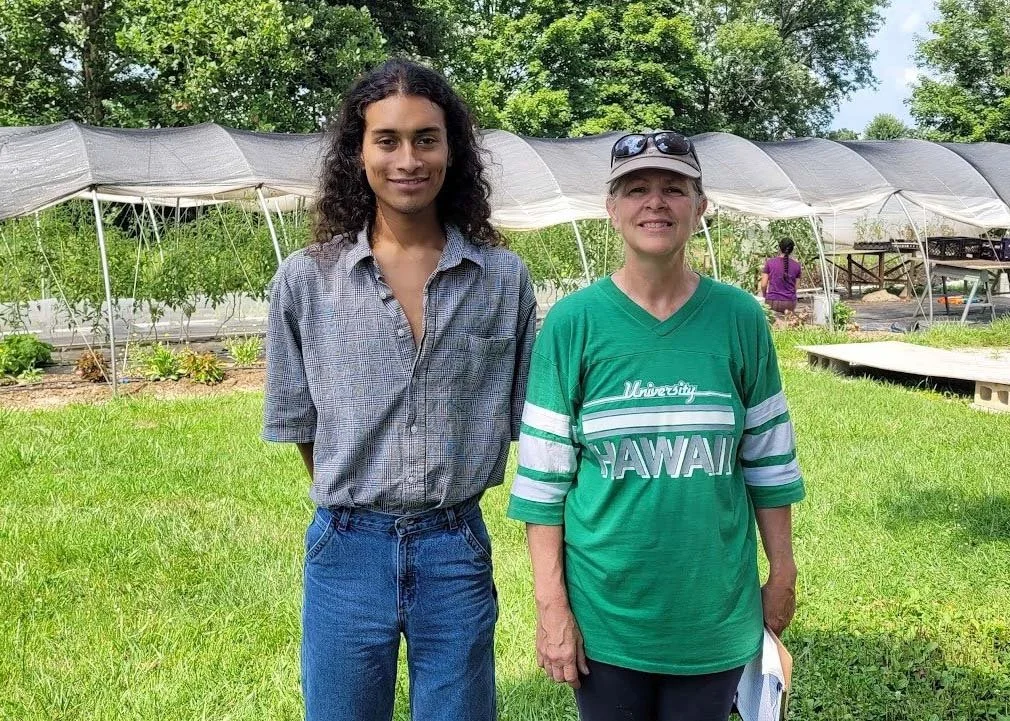
The mentorship program includes regular interactions for the mentor/mentee pair, including:
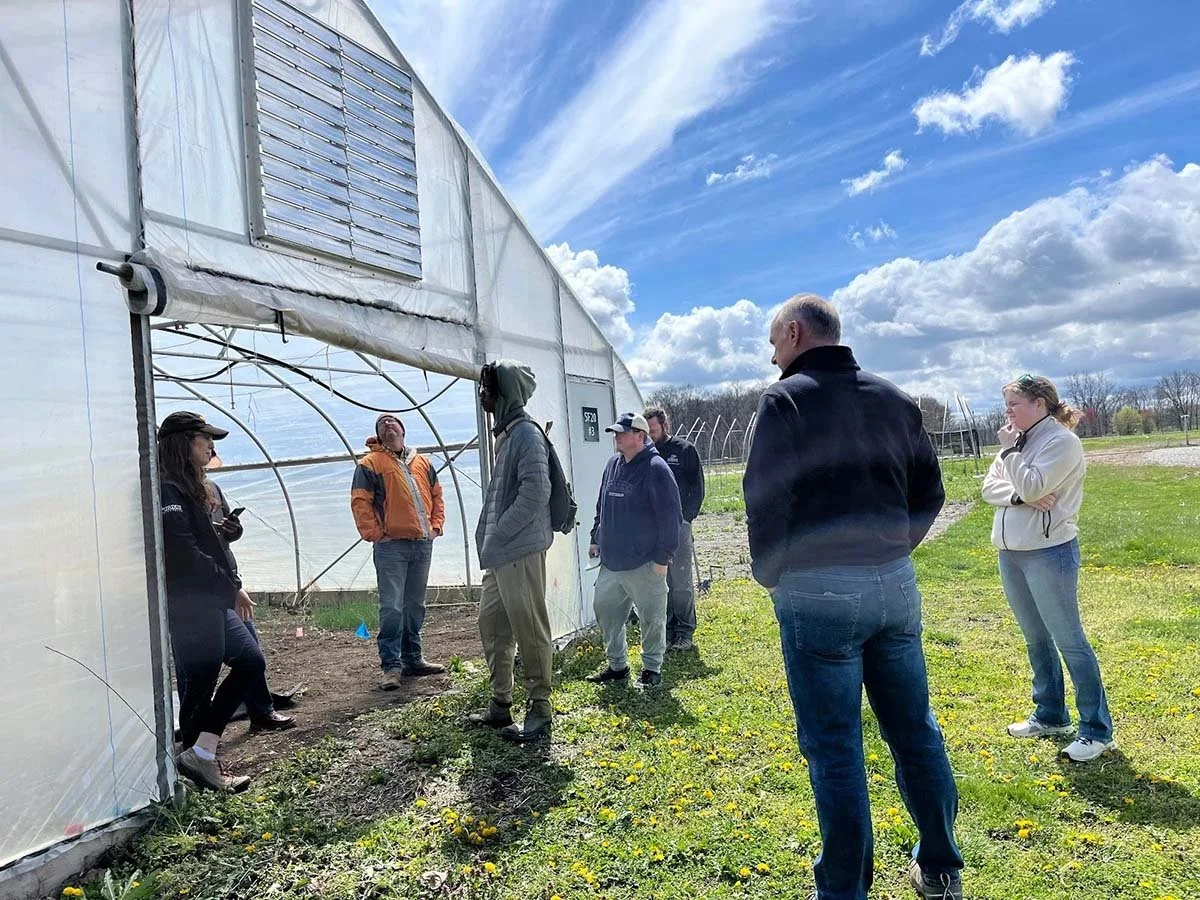
A kick-off event and a closing event with all 10 mentor/mentee pairs. Both events will be hosted on a farm in central Indiana, including a farm tour, potluck, and time to get to know each other and reflect on the mentorship experience.
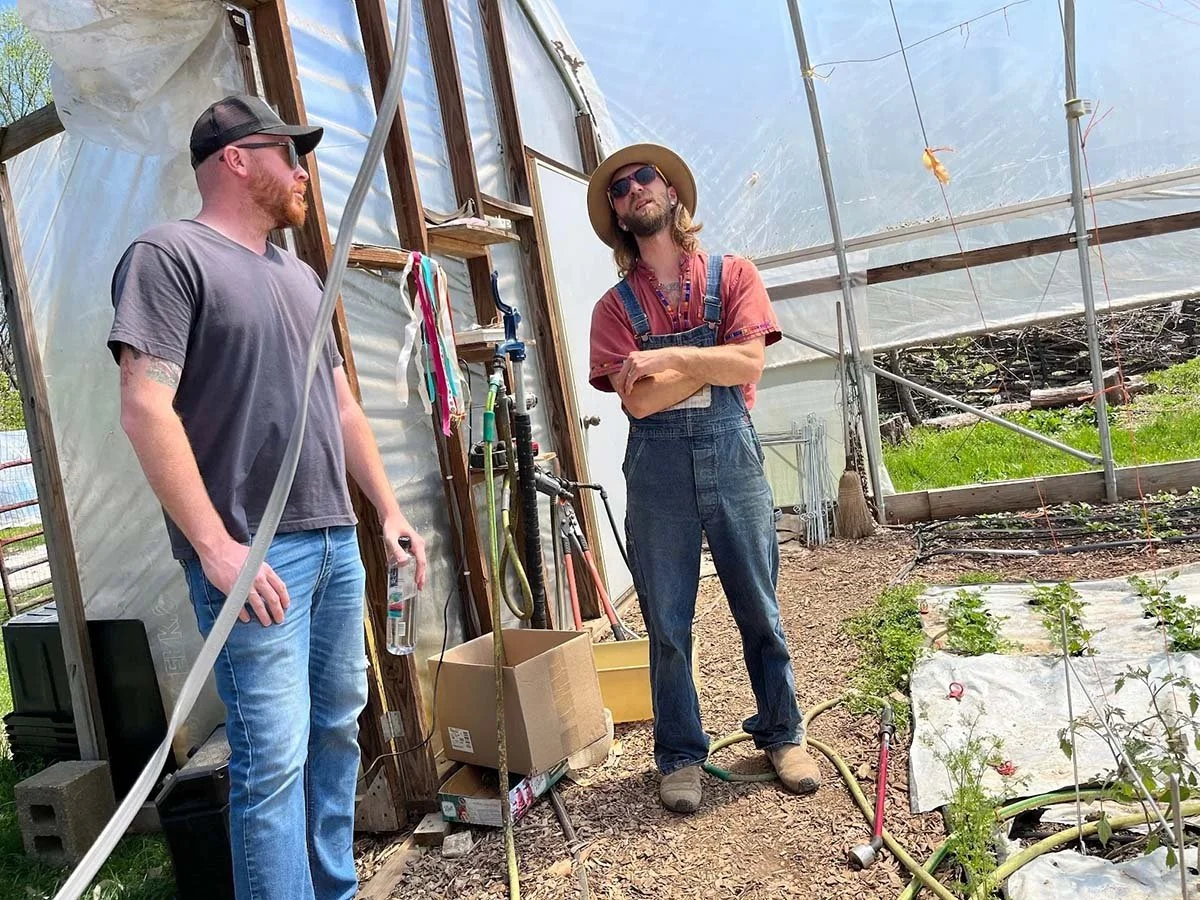
A visit to the mentor’s farm.
A visit to the mentee’s farm.
A midway virtual group gathering to check-in as a whole cohort
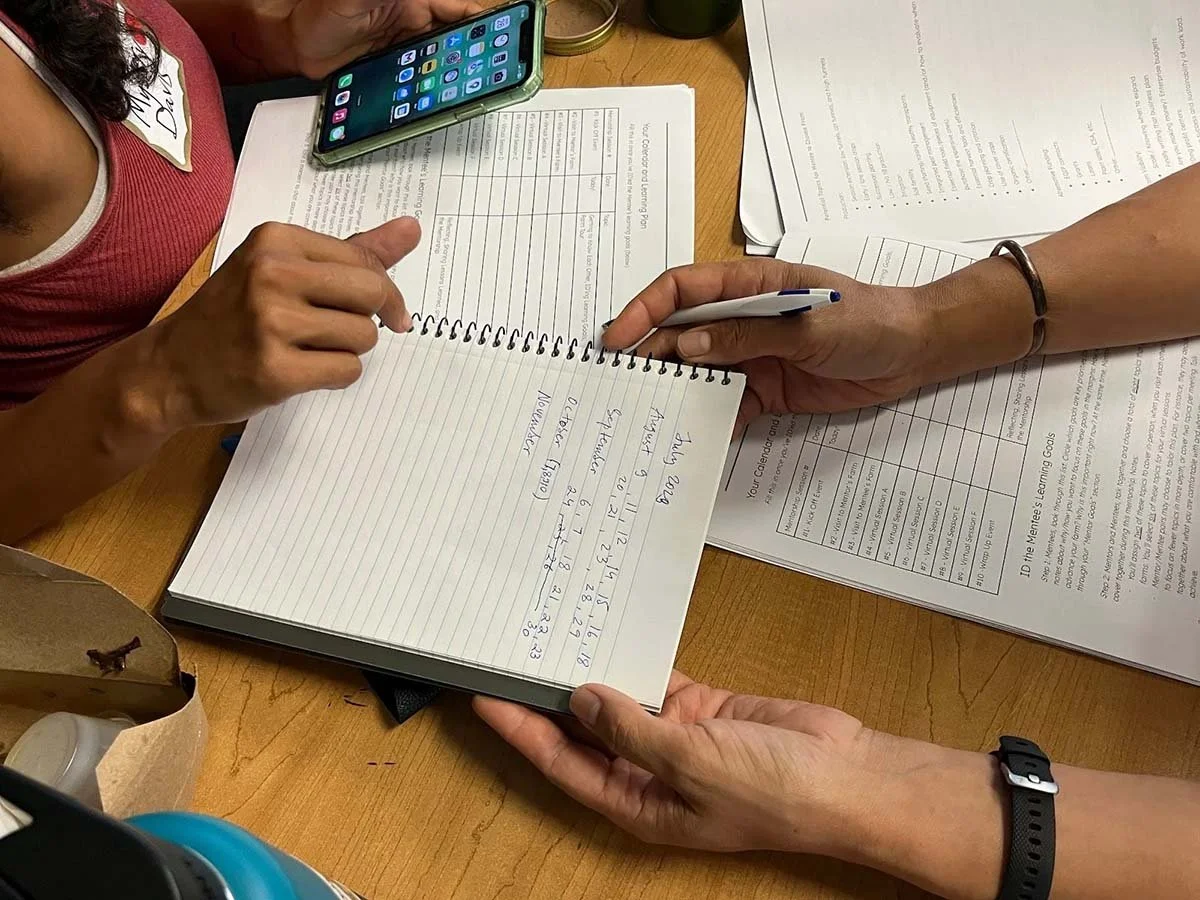
Six (minimum) virtual conversations via phone/zoom that dive into key topics.
The chance to ask questions in real time, as the season progresses, via text/email.
We provide a workbook to guide the mentorship sessions, including reflections to prepare for the session’s topic and prompts to facilitate the actual mentor-mentee conversation. Each pair decides what topics to cover for each meeting, and can tailor the curriculum to fit their mentee’s needs and the mentor’s experience.
We're happy that we've had excellent support from some partner organizations. The 2023 and 2024 programs were co-hosted by the Hoosier Young Farmers Coalition (HYFC) and Partners IN Food and Farming (PIFF), with grant support from the Indiana State Department of Agriculture's (ISDA) Specialty Crop Block Grant.
FAQ
-
We are not currently accepting application for the Mentorship Program. We hope you will consider applying for our next round. Be the first to know when we're accepting applications by signing up for PIFF's email newsletter, and by following us on Facebook or Instagram.
-
To be eligible to be a mentor, you must meet all three criteria:
Grow “specialty crops” in Indiana (that’s veggies, fruit, mushrooms, honey, etc.).
Have completed 7+ years of farming on your own operation
Farm for a significant amount of your time or income (at least 20 hours a week)
Mentors are expected to:
Participate in a training session prior to or during the kickoff
Attend four in-person sessions: A kickoff gathering, a 1:1 visit to your mentee's farm, a 1:1 tour of your farm with your mentee, and a wrap up gathering Participate in a midway virtual full-group gathering
Participate in six ~1 hour phone calls or video calls with your mentee
Trade emails, texts, or calls with your mentee to field real time Q&A (1-2 times per month over the course of the mentorship)
Mentors will:
Show an honest, unfiltered look of their farm when hosting their mentees: what's working, what's not, what's next
Share knowledge, experiences, and insights regarding personal career trajectory and professional path
Suggest specific tools and resources that might help your mentee meet their farming goals
Help build confidence by offering critical encouragement
Remain engaged and respond to communication from your mentee in a timely and consistent manner
Show up on time for meetings (including in person, or via phone or virtual) and communicate any unforeseen circumstances that may impact meetings
Listen well and be attentive to mentee's unique needs (based on their current stage in farming and stated professional goals)
Provide thoughtful feedback at the conclusion of the program about what worked, and what didn't so we can continue improving the program for future cohorts.
Communicate with the facilitators of the mentorship program if any issues arise in the mentoring relationship or if you can no longer participate in the program
Be paid $1,200 to compensate for the time they spend on this program (30-40 hrs).
Mentors will not:
Be expected to know everything. Instead, mentors will serve as a resource, and help mentees by actively listening, asking questions, sharing their experience, and pointing them to knowledge sources, field days, etc. that might help
Be expected to provide their mentees with a job
Be expected to offer advice on topics that extend beyond the bounds of professional development (e.g., advice on personal relationships, serious financial issues, etc.).
Discontinue communication when their schedules get busy and other demands outside the mentoring relationship increase. Instead, they will let their mentees know what’s going on and work together to amend the meeting schedule
-
To be eligible to be a mentee, you must meet all three criteria:
Grow “specialty crops” in Indiana (that’s veggies, fruit, mushrooms, honey, etc.).
Have completed between 2-7 years of farming on your own operation.
Farm for a significant amount of your time or income (at least 20 hours a week on average).
Mentees are expected to:
Attend four in-person sessions: A kickoff gathering with all ten mentor/mentee pairs; a 1:1 visit to your mentee’s farm; a 1:1 tour of your farm with your mentee; and a wrap up gathering with all ten mentor/mentee pairs.
Participate in a midway virtual full-group gathering
Attend one Field Day hosted by PIFF or another farming organization
Participate in six ~1 hour phone calls or video calls with your mentor
Trade emails, texts, or calls with your mentor to ask real time Q&A (1-2 times per month over the course of the mentorship)
Mentees will:
Show an honest, unfiltered look of their farm when hosting their mentors: what’s working, what’s not, what’s next
Be proactive in reaching out to their mentors throughout the mentoring relationship
Clearly communicate goals and expectations for the mentoring relationship including the frequency and mode of communication
Be eager to receive and show appreciation for advice and constructive feedback.
Show up on time for meetings (whether in person or via phone or video conference) and communicate any unforeseen circumstances that may impact scheduled meetings
Provide thoughtful feedback at the conclusion of the program to what worked, and what didn’t so we can continue improving the program for future cohorts.
Communicate with the facilitators of the pilot mentoring program if any issues arise in the mentoring relationship or if they can no longer continue in the program
Be paid $800 to compensate for the time they spend on this program (about 30-40 hours total).
Mentees will not:
Receive guidance or advice on topics that extend beyond the bounds of professional development (e.g., personal relationships, serious financial issues, etc.). Mentees should feel empowered to ask for resources related to farm finances, farmer mental health, etc.
Expect their mentors to know everything. Instead, mentors will serve as a resource, and help mentees by sharing their experience, pointing them to knowledge sources, and asking questions.
Discontinue communication when their schedules get busy and other demands outside the mentoring relationship increase. Instead, they should let their mentor know what’s going on and work together to amend the meeting schedule as needed
-
Read all about our 2023 cohort and 2024 cohort.
Our Partners
This work is made possible thanks to grant support from the Indiana State Department of Agriculture and PIFF. Thank you to the Hoosier Young Farmers Coalition, who piloted a mentorship program in 2023 and 2024.